
📑 Table of Contents
- How to Become IAS Officer After 12th in 7 Steps
- IAS After 12th Roadmap Visual
- UPSC 2026 Highlights
- Can You Become IAS Right After 12th?
- Who is an IAS Officer?
- Duties
- Eligibility Criteria 2026
- Start After 12th vs After Graduation
- 10-Step Guide
- Best Graduation Courses
- Preparation Timeline
- Stream-wise Strategy
- Exam Pattern
- Best Books
- Daily Study Plan
- Common Mistakes
- Without Coaching
- Salary and Promotion
- IAS vs State PCS vs IPS
- FAQs – 20 Questions
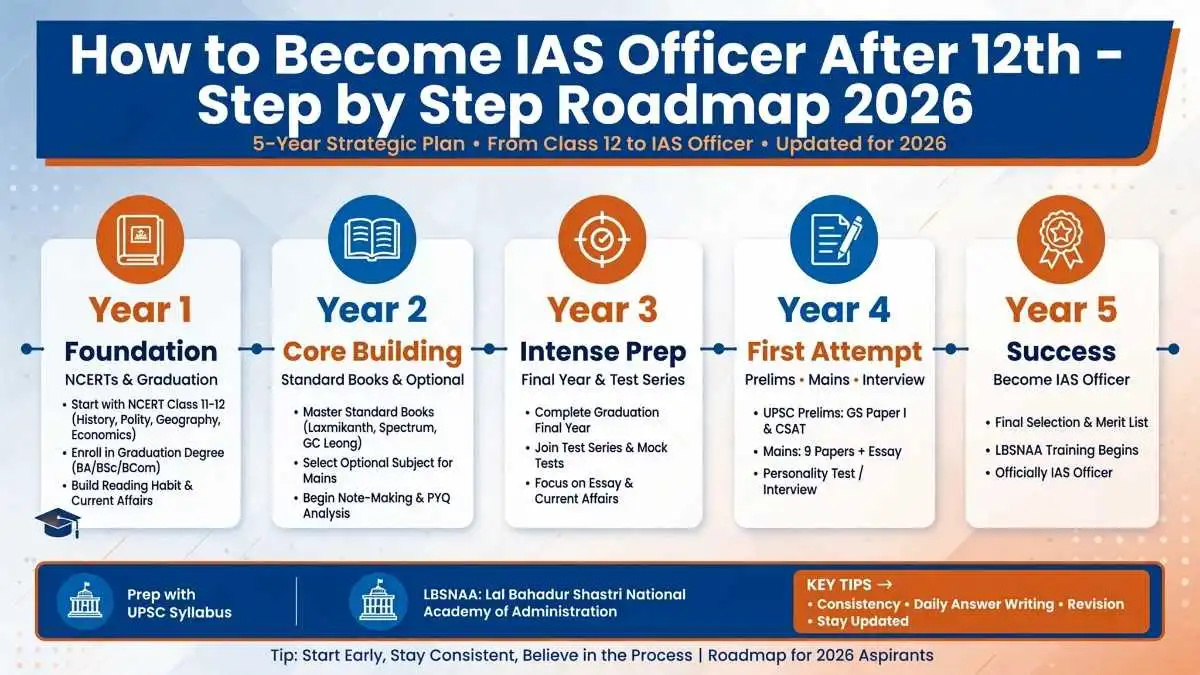
How to Become IAS Officer After 12th in 7 Simple Steps
- Complete Class 12 from any board.
- Choose a graduation course you like.
- Build basics with NCERT books.
- Read newspaper daily for current affairs.
- Finish your graduation degree.
- Clear UPSC Prelims, Mains, and Interview.
- Join LBSNAA training and become an IAS officer.
📌 IAS After 12th Roadmap
Class 12
↓
Graduation [BA/BSc/BCom]
↓
NCERT Foundation
↓
Current Affairs
↓
UPSC Prelims
↓
UPSC Mains
↓
Interview
↓
LBSNAA Training
↓
IAS Officer
Every year, lakhs of students dream of becoming an IAS officer. But very few know the real path. So if you want to become IAS after 12th, read this guide carefully.
You cannot take the UPSC exam right after 12th. You need graduation first. However, you can start your preparation right after 12th. And this early start matters a lot.
📊 UPSC 2026 Highlights
| Factor | Details |
|---|---|
| Applicants | 10+ lakh every year |
| Vacancies | ~1,000 for all services |
| Success Rate | Below 1% |
| Minimum Qualification | Graduation in any stream |
| Minimum Age | 21 Years |
| Selection Process | Prelims + Mains + Interview |
Can You Become IAS Right After 12th?
No, you cannot.
UPSC needs graduation. This rule is mandatory. So you can try only in your final year of graduation.
But you can do a lot after 12th. For example, you can choose the right graduation course. Also, you can start NCERT books. In addition, you can build a newspaper habit. Therefore, you will understand the exam pattern early.
Because of this, students who start early have a clear advantage. IAS ke alawa 12th ke baad students ke paas bhi kai career options hote hain. 12th ke baad kya karein, iski stream-wise complete guide mein courses, career options aur government job opportunities ke baare mein detail mein jaanein. For other career options, check Jobs After 12th and Best Colleges After 12th.
Who is an IAS Officer? Role and Career
An IAS officer is a civil servant. UPSC selects officers through the Civil Services Exam. These officers run government policy. Moreover, they work at district, state, and central levels.
In fact, IAS officers are among the most powerful officials in India. Their training happens at LBSNAA, Mussoorie.
Duties of an IAS Officer
- They implement government schemes on the ground.
- They manage district work as DM or Collector.
- They maintain law and order with the police.
- They handle land revenue and disaster management.
- They manage budgets and public funds.
- They work with ministers and elected leaders.
Eligibility Criteria 2026
Check official details on UPSC website. Also, rules are available on DoPT website.
Education Needed
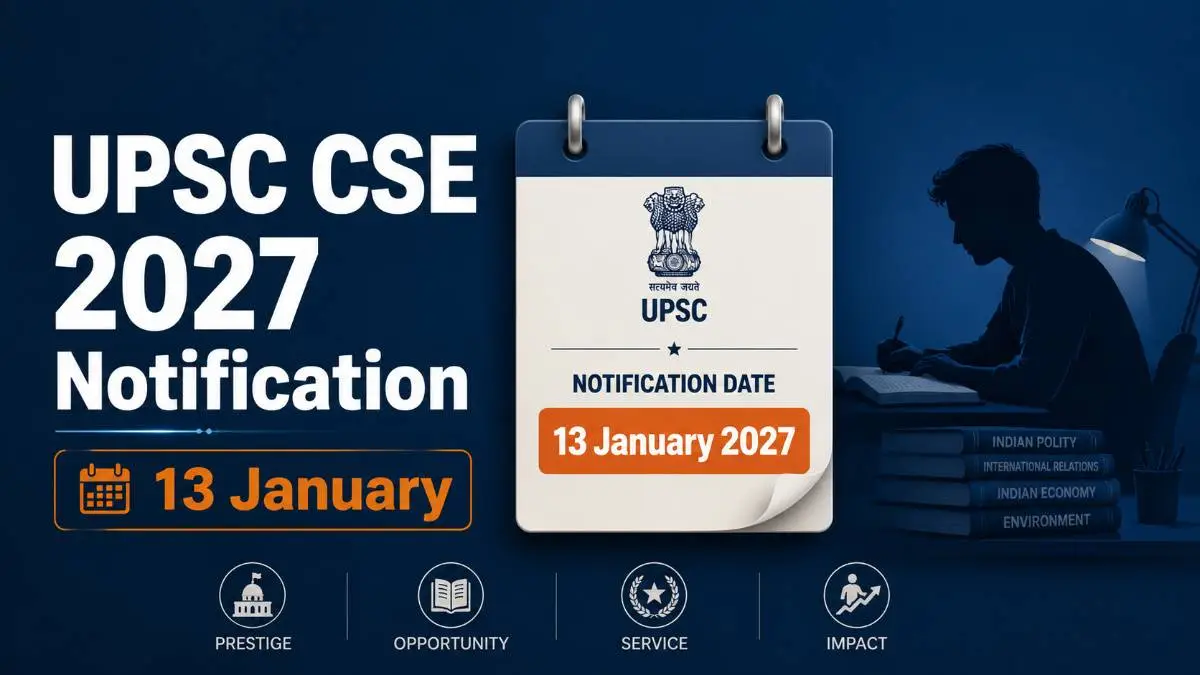
You need a graduation degree from a recognised university. Any stream is okay. Final year students can also apply for Prelims. See detailed UPSC Notification and UPSC Calendar.
Age Limit
| Category | Age Limit |
|---|---|
| General | 21 to 32 years |
| OBC | 21 to 35 years |
| SC/ST | 21 to 37 years |
OBC gets 3 years relaxation. SC/ST gets 5 years. So check the latest notification for exact numbers. Also check UPSC Cut Off trends.
Attempts Allowed
| Category | Attempts |
|---|---|
| General | 6 attempts |
| OBC | 9 attempts |
| SC/ST | No limit till age limit |
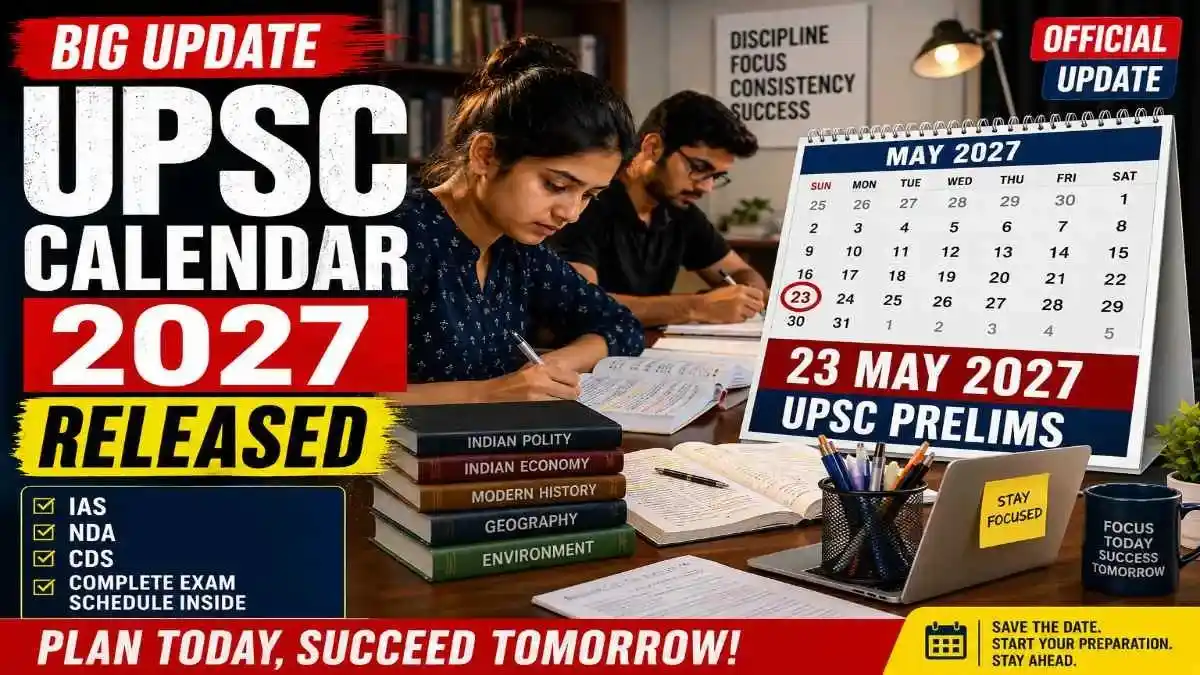
For dates, see UPSC Calendar, UPSC Admit Card updates, and UPSC Result page.
- Finish NCERT Class 6-12 twice.
- Read newspaper for 45 minutes daily.
- Learn answer writing basics.
- Follow PIB and Yojana for schemes.
- Solve one previous paper every month.
Start After 12th vs Start After Graduation
| Factor | Start After 12th | Start After Graduation |
|---|---|---|
| Time Available | 4-5 years | 1-2 years |
| NCERT Coverage | 3-4 times revision | 1 time |
| Newspaper Habit | Strong, 3+ years | Weak, 6-12 months |
| Answer Writing | 2+ years practice | 6 months practice |
| First Attempt Age | 21-22 years | 24-26 years |
| Success Chance | Higher – more attempts left | Lower – less time |
Therefore, starting after 12th gives you more time and better chances.
10-Step Guide After 12th
Step 1: Choose Right Stream
Choose Science, Commerce, or Arts based on your interest. All streams are valid for UPSC. Your graduation matters more than Class 11-12 stream.
Step 2: Complete Graduation
Join a bachelor’s degree. Any degree works. But some subjects overlap more with UPSC syllabus. So see Jobs After BA and Jobs After BA Female.
Step 3: Start Preparation Early
Start NCERT books from NCERT. Read them from Class 6 to 12. This builds your base. Download NCERT Books PDF list.
Step 4: Choose Optional Subject
Choose optional based on interest and background. Do not follow friends. Popular options are Political Science, History, Geography, and Sociology.
Step 5: Prepare Current Affairs
Read daily news. Make short notes. Focus on national events, schemes, and economy. Follow PIB and Daily Current Affairs. Also try Current Affairs Quiz.
Step 6: Practice Answer Writing
Mains needs good writing skills. So start writing early. Practice 2 answers daily.
Step 7: Appear for Prelims
Apply in your final year of graduation. Prelims has 2 papers. GS Paper I and CSAT Paper II. CSAT needs 33% to qualify.
Step 8: Prepare for Mains
After Prelims, focus on Mains. Mains has 9 papers. It includes Essay, GS papers, and optional papers. Check UPSC Syllabus for details.
Step 9: Clear Interview
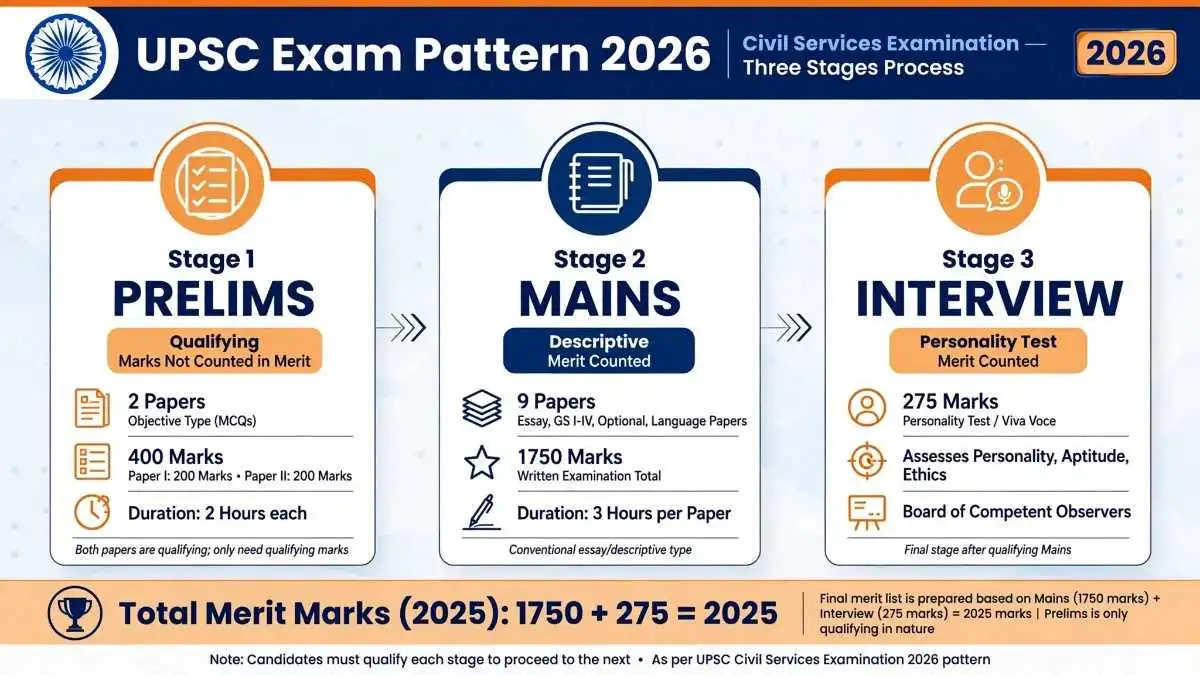
People also call the interview a Personality Test. UPSC board checks awareness and communication. Final merit is Mains 1750 + Interview 275 = 2025 marks.
Step 10: Training at LBSNAA
Selected candidates go to LBSNAA Mussoorie. They get training before first posting.
Best Graduation Courses
No single course is best. Students from all backgrounds clear UPSC. But some courses overlap more with syllabus.
| Course | Why It Helps |
|---|---|
| BA Political Science | Direct overlap with Polity. Very high usefulness. |
| BA History | Helps in History and Culture. Very high usefulness. |
| BA Sociology | Helps in Society and Essay. High usefulness. |
| LLB | Helps in Polity and Constitution. Very high usefulness. |
| BSc / BTech | Good for CSAT and analytical skills. Moderate usefulness. |
Choose what you like to study for 3 years. Also check UPSC Books, Best Books After 12th, and Jobs After Graduation.
UPSC Preparation Timeline
| Phase | What To Do |
|---|---|
| Months 1-12 | Finish NCERTs. Start newspaper habit. |
| Months 13-24 | Read standard books. Start optional basics. |
| Months 25-36 | Start answer writing. Make current affairs notes. |
| Months 37-48 | Give mock tests. Revise. Give first attempt. |
Stream-wise Strategy
For Science Students
Science students are good at CSAT and Science & Tech. But they need extra focus on History and Polity. Also, they should practice answer writing more.
For Commerce Students
Commerce students are good at Economy. This helps in GS-3. But they need more focus on History and Ethics. Check Jobs After BCom.
For Arts Students
Arts students have maximum overlap with syllabus. History, Polity, and Geography are already in their course. That is why many toppers are from Arts.
Exam Pattern 2026
| Stage | Marks | Type |
|---|---|---|
| Prelims | 400 | Objective – Qualifying only |
| Mains | 1750 | Descriptive – 9 papers |
| Interview | 275 | Personality Test |
Prelims has negative marking. 1/3rd mark cuts for a wrong answer. Only GS Paper I counts for cutoff.
Best Books for Preparation
- NCERT Class 6-12 – For basic foundation.
- Indian Polity by Laxmikant – For Polity.
- Modern History by Spectrum – For History.
- Geography by GC Leong – For Geography.
- Indian Economy by Ramesh Singh – For Economy.
- The Hindu + Yojana – For current affairs.
See full list at UPSC Books List and Previous Year Papers. Also see NCERT Books PDF.
Daily Study Plan
2-Hour Plan – For Class 11-12
1 hour NCERT reading. 30 minutes newspaper. 30 minutes revision.
4-Hour Plan – Early Graduation
1.5 hours NCERT. 1 hour current affairs. 1 hour optional basics. 30 minutes revision.
6-Hour Plan – Final Year
2 hours GS. 1.5 hours optional. 1 hour current affairs. 1 hour writing. 30 minutes revision.
Common Mistakes to Avoid
- Beginner: No syllabus understanding. Too many books. No NCERTs.
- College: No answer writing. Wrong optional choice. No mocks.
- Last Year: Only new topics. No revision. Ignoring CSAT.
- Do not start without understanding syllabus.
- Do not buy too many books. Revise few sources.
- Do not skip NCERT basics.
- Do not delay answer writing till last months.
- Do not choose optional by peer pressure.
- Do not ignore current affairs notes.
- Do not skip mock tests.
- Do not ignore CSAT. Many fail due to it.
- Do not skip previous year papers.
- Take care of health and sleep.
Preparation Without Coaching
Can you clear without coaching? Yes. Many toppers did it.
Here is how you can do it after 12th:
- Stick to limited sources. NCERT + 1 standard book per subject.
- Use free resources. PIB, RSTV, and Yojana are free.
- Join free answer writing groups on Telegram.
- Give at least 30 Prelims and 10 Mains mocks before first attempt.
- Make a fixed timetable. Be disciplined.
Coaching gives guidance only. Self-study with consistency works.
Salary and Promotion
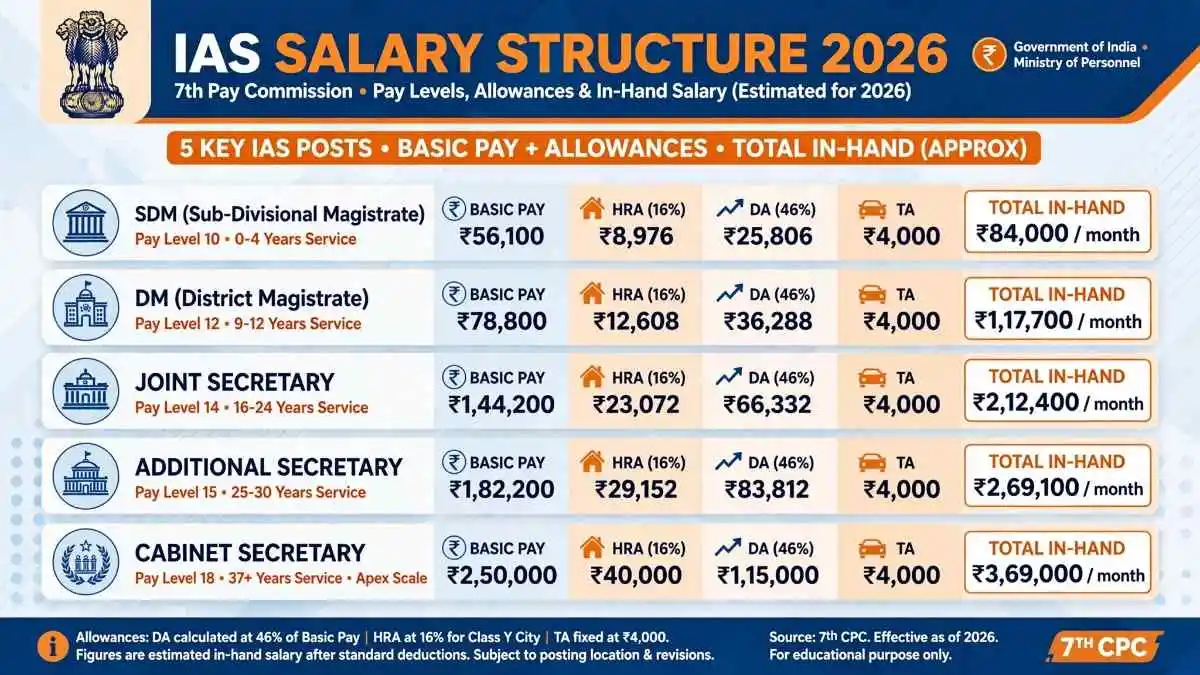
| Component | Amount |
|---|---|
| Basic Pay Entry Level | ₹56,100 per month |
| Gross Entry Level | ₹80,000 – ₹90,000 |
| Cabinet Secretary | ₹2,50,000 fixed |
| Level | Post | Years |
|---|---|---|
| Entry | SDM | 0-4 years |
| Mid | District Magistrate | 5-8 years – varies by cadre |
| Senior | Commissioner | 9-16 years |
| Top | Chief Secretary | 26+ years |
Note: Promotion time varies by state cadre, vacancies, and performance. It is not fixed. You also get house, car, medical, and pension benefits.
IAS vs State PCS vs IPS
| Service | Exam | Starting Pay | Top Post |
|---|---|---|---|
| IAS | UPSC CSE | ₹56,100 | Cabinet Secretary |
| IPS | UPSC CSE | ₹56,100 | DGP |
| State PCS | UPPSC | ₹47,600 | Principal Secretary State |
IAS has all-India posting. State PCS is state only. Salary is same for IAS and IPS at start. Roles are different. See IAS vs IPS Comparison.
Can Diploma Students Become IAS?
Diploma alone is not enough. You need graduation. So after diploma, do BA/BTech via lateral entry. Then you become eligible. Check Jobs After Diploma as interim option.
FAQs – 20 Questions – Long Tail Keywords
Can I become IAS directly after 12th?
No. You need graduation. You can only start preparation after 12th.
What is minimum qualification?
Bachelor’s degree from recognised university. Any stream works.
Which stream is best after 10th?
All streams are valid. Choose based on interest. Arts has more overlap, but science and commerce students also clear.
What is age limit?
General 21-32 years. OBC 35 years. SC/ST 37 years.
How many attempts are allowed?
General 6 attempts. OBC 9 attempts. SC/ST unlimited till age limit.
Is coaching necessary?
No. Many students cleared without coaching. They used NCERTs and self-study.
Can girls become IAS after 12th?
Yes. Girls have same eligibility as boys. Many female toppers started after 12th.
Which subject is best for IAS?
Political Science, History, Geography, and Sociology have high overlap with GS papers.
Can IAS be cracked without coaching?
Yes. With 3-4 years after 12th, self-study is possible. You need discipline and consistency.
Is maths compulsory for IAS?
No. Maths is not compulsory. CSAT needs only 33% to qualify. You can become IAS without maths in 12th.
What is CSAT?
CSAT is Paper II of Prelims. It is qualifying. You need 33% marks. If you fail CSAT, you fail Prelims.
Can engineers become IAS?
Yes. Engineers, doctors, commerce students – all can become IAS. Stream does not matter.
What is starting salary?
Gross salary is around ₹80,000 to ₹90,000 per month at entry level. Basic pay is ₹56,100.
How long does it take after 12th?
It takes 3 years graduation plus 1-3 years preparation. So total 4-6 years.
Can commerce student become IAS after 12th?
Yes. Commerce students can become IAS. They are good at Economy. But they need extra focus on History and Ethics. Any stream is eligible after graduation.
Can PCB student become IAS after 12th?
Yes. PCB students can become IAS. UPSC needs only graduation in any stream. Your 12th subject does not matter. Many science students clear UPSC.
Can diploma holder become IAS after 12th?
Diploma alone is not enough. You need graduation degree. So after diploma, complete BA/BTech via lateral entry. Then you become eligible for IAS.
How much percentage required in 12th for IAS?
No percentage required in 12th for IAS. UPSC needs only graduation pass. Your 12th marks do not matter for eligibility.
Which college is best for IAS after 12th?
Any recognised university is okay. Delhi University, JNU, BHU are popular. But college does not matter much. Your preparation matters more. Check Best Colleges After 12th.
Can BA first year student apply for UPSC?
No. BA first year students cannot apply. You can apply only in final year of graduation. However, you can start preparation in first year.
Key Takeaways
- You cannot give UPSC directly after 12th. Graduation is mandatory.
- Use Class 12 and early graduation years to build NCERT base.
- Choose graduation based on interest, not pressure.
- Exam has 3 stages – Prelims, Mains, Interview. Each needs different approach.
- Consistency and revision matter more than number of books.
Final Words
Becoming an IAS officer is a long journey. It needs patience and hard work. There is no shortcut.
If you are in Class 12, use your time wisely. Build strong basics. Develop reading habit. And understand how UPSC actually works.
Disclaimer: Eligibility and pattern may change year to year. Always verify from official UPSC website upsc.gov.in.
Written By: Syed Imran Zaidi, Career Guidance Editorial Team
Reviewed By: UPSC Subject Expert
Last Updated: August 2026